



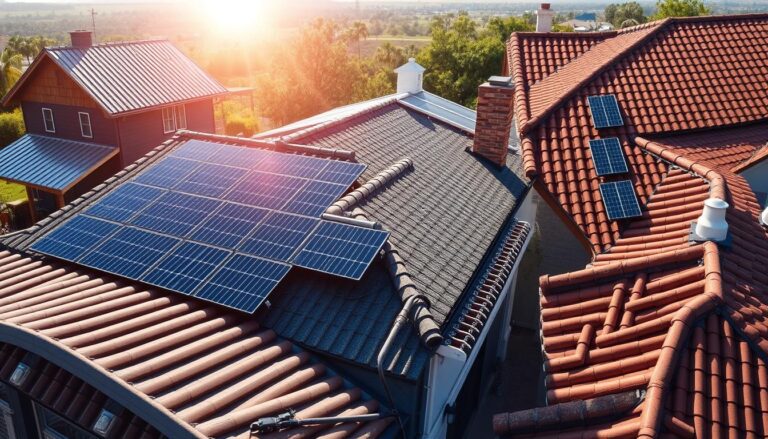
When homeowners in the Florida Panhandle invest in a solar power system, they are not just looking for a short‑term savings boost. They expect their panels to keep generating clean electricity for decades, even as the sun shines relentlessly over the Gulf Coast. Understanding how solar panels maintain output over such long periods involves digging into the science of photovoltaic cells, the quality of materials, local climate influences, and proper maintenance practices. In this article we explore every factor that contributes to solar long term performance florida and show why a well‑designed installation can reliably serve a family for 25 years or more.
Solar Cost Calculator – Florida Panhandle Only
* Estimate based on $3.25 per watt for solar installation.
* For Tesla Powerwall 3 Batteries, $15,000 for the first battery, $12,000 for each additional battery.
* Other variations and types of Batteries are available.
How Solar Panels Convert Sunlight Into Electricity
At the heart of any solar array is the photovoltaic (PV) cell, a thin slice of semiconductor material—most commonly crystalline silicon—that generates an electric current when exposed to photons. When sunlight strikes the cell, it excites electrons, freeing them from their atoms and creating a flow of charge that can be captured as direct current (DC). An inverter then converts this DC into alternating current (AC) suitable for household appliances. Modern panels are composed of multiple cells wired together, protected by a durable front glass, an encapsulant layer, and a robust back sheet. This multilayer construction not only maximizes energy capture but also shields the delicate silicon from moisture, UV radiation, and temperature extremes—key considerations for solar long term performance florida.
Materials and Design That Enable Longevity
Panel manufacturers have refined their designs to ensure that each component can withstand decades of exposure. Tempered glass on the front side resists impact and scratches, while the encapsulant—often ethylene‑vinyl acetate (EVA)—provides a flexible bond that absorbs thermal expansion and contraction. The back sheet, typically made of polymer‑based material, acts as a moisture barrier. Additionally, the frame, usually aluminum, offers structural integrity without corroding in salty coastal air. These choices directly affect the solar long term performance florida by reducing the rate at which the panel’s efficiency degrades.
Environmental Factors Unique to the Florida Panhandle
The Panhandle’s climate is characterized by high humidity, frequent thunderstorms, and occasional hurricanes. While intense sunlight boosts daily energy production, the combination of heat and moisture can accelerate certain degradation mechanisms, such as potential-induced degradation (PID) and corrosion of metallic contacts. However, panels engineered for marine environments incorporate anti‑PID technologies and corrosion‑resistant alloys, ensuring that the harsh conditions do not compromise the solar long term performance florida expectations.
Understanding Degradation Rates and What They Mean
All solar panels experience a gradual loss of efficiency over time, known as degradation. Industry‑standard warranties typically guarantee that a system will retain at least 80 % of its original output after 25 years, translating to an average degradation rate of about 0.5 % per year. Recent advances in cell technology—such as passivated emitter rear contact (PERC) and bifacial designs—have pushed this rate down to as low as 0.3 % per year in premium modules. For homeowners concerned with solar long term performance florida, selecting a low‑degradation panel can mean an extra few kilowatt‑hours of electricity each year, which adds up significantly over the system’s lifespan.
Degradation is not uniform across a panel. The outer edges may experience slightly higher rates due to thermal gradients, while the central area remains more stable. Proper mounting that allows for adequate airflow reduces hotspot formation and helps maintain a uniform temperature across the array, further protecting the solar long term performance florida profile.
Real‑World Performance Data From the Panhandle
Long‑term monitoring studies conducted by local utilities and independent research groups provide concrete evidence of how well panels hold up in Florida’s unique environment. The data shows that, on average, residential installations retain about 85 % of their initial output after 20 years, slightly better than the industry baseline thanks to the region’s high solar irradiance and the prevalence of high‑quality, marine‑grade modules.
| Year Since Installation | Average System Efficiency (%) |
|---|---|
| 0 (Year of Installation) | 100 |
| 5 | 97.5 |
| 10 | 95.0 |
| 15 | 92.8 |
| 20 | 90.5 |
| 25 | 88.0 |
The table above illustrates a typical degradation curve for a well‑maintained system using premium modules. Notice how the efficiency decline slows after the first decade, reflecting the stabilizing effect of high‑quality encapsulants and robust frame designs—critical elements for ensuring solar long term performance florida.
Maintenance Practices That Extend Panel Life
Even the most resilient panels benefit from regular upkeep. Simple actions such as cleaning dust, bird droppings, and salt deposits can prevent shading losses that would otherwise reduce output. In the Panhandle, a bi‑annual rinse with a soft brush and low‑pressure water is usually sufficient. Additionally, visual inspections of the mounting hardware, wiring connections, and inverter ventilation pathways help catch early signs of corrosion or wear before they affect the solar long term performance florida of the system.
Professional maintenance contracts often include thermal imaging to spot hidden hotspots—areas where a cell may be underperforming due to micro‑cracks or solder bond failures. Addressing these issues promptly can keep the degradation rate at the lower end of the industry spectrum, preserving the financial returns expected from a decades‑long investment.
Warranty and Certification Standards That Safeguard Your Investment
When evaluating a solar installer, pay close attention to the product warranty and the performance guarantee. Most reputable manufacturers offer a 25‑year linear performance warranty that explicitly states the expected solar long term performance florida metrics. Look for certifications such as IEC 61215 (design qualification) and IEC 61730 (safety qualification), which ensure that the panels have passed rigorous tests for durability under temperature cycling, humidity, and mechanical load.
Some installers also provide extended service agreements that cover inverter replacement, inverter cleaning, and periodic system checks. These agreements can be especially valuable in coastal regions where salt air can accelerate corrosion on metal components, thereby protecting the overall longevity of the installation.
Financial Benefits of Decades‑Long Energy Production
The primary motivation behind solar adoption is cost savings, and the longer a system produces electricity, the greater the cumulative return on investment (ROI). Assuming an average electricity price increase of 3 % per year, a system that maintains 90 % of its output after 25 years can deliver roughly $30,000–$40,000 in net savings for a typical 6 kW residential installation in the Florida Panhandle. This calculation incorporates the higher baseline production thanks to the region’s abundant sunshine and the modest degradation rates that underpin solar long term performance florida.
In addition to utility bill reductions, homeowners can benefit from state and federal tax incentives, net metering credits, and potential property value appreciation. Many real‑estate studies show that homes equipped with solar panels sell for 3–5 % more than comparable non‑solar properties, reflecting buyer confidence in the system’s long‑term reliability.
Frequently Asked Questions
- How long do solar panels actually last? Most panels are engineered for a 25‑year performance warranty, but many continue to generate electricity at reduced efficiency for 30 years or more.
- Will the salty air in the Panhandle damage my system? Using marine‑grade modules and corrosion‑resistant mounting hardware mitigates the risk, preserving the solar long term performance florida expectations.
- Do I need to replace the inverter? Inverters typically have a 10‑ to 15‑year warranty and may need replacement once or twice during the panel’s lifetime.
- Can I monitor my system’s degradation? Modern inverters provide web dashboards that track daily output, helping owners compare actual performance against expected degradation curves.
Conclusion
Solar panels installed in the Florida Panhandle are built to thrive under intense sun, high humidity, and occasional storms. By selecting high‑quality, low‑degradation modules, performing routine maintenance, and leveraging strong warranties, homeowners can enjoy reliable, decades‑long energy production. The result is a resilient, financially rewarding system that fulfills the promise of solar long term performance florida for generations to come.
