
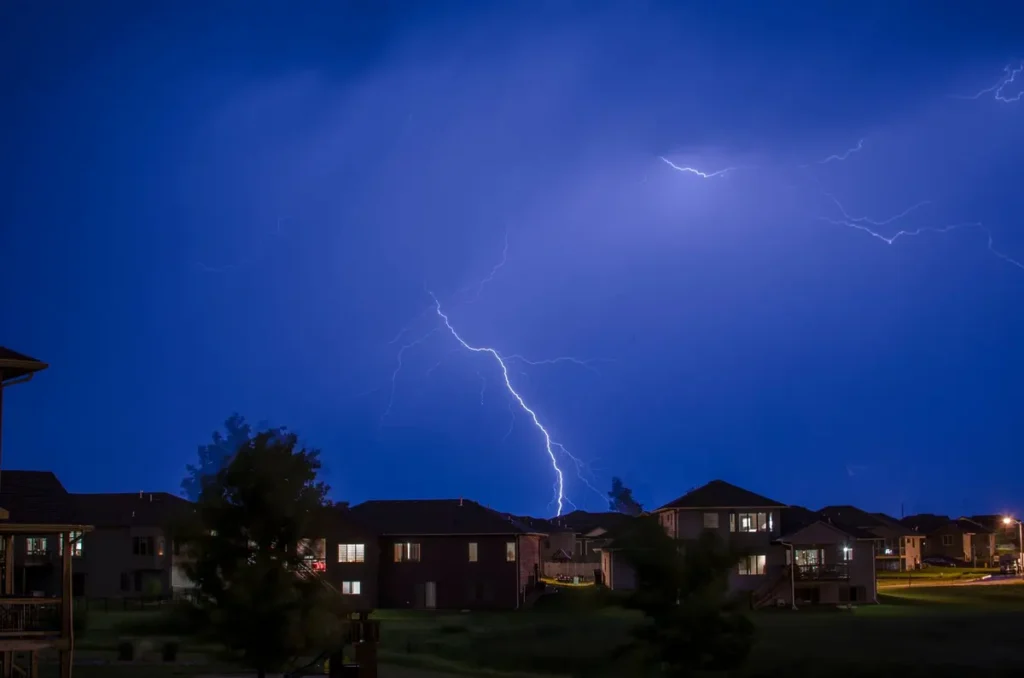
Florida sees more lightning than any other state, and the Panhandle gets its full share. Summer afternoons from Pensacola to Apalachicola bring storms that can put thousands of strikes on the ground in an hour. Lightning protection for homes is therefore a fair question for anyone who owns property here. This guide explains how lightning damages a house, what a protection system is and what it is not, what it costs, who really needs one, and what to do during a storm.
Solar Cost Calculator – Florida Panhandle Only
* Estimate based on $3.25 per watt for solar installation.
* For Tesla Powerwall 3 Batteries, $15,000 for the first battery, $12,000 for each additional battery.
* Other variations and types of Batteries are available.
How lightning damages a home
Lightning harms houses in three ways, and only one of them is a direct hit.
- Direct strike. The bolt hits the roof, a chimney or a nearby tree and travels through the structure looking for a path to ground. It can start a fire in the attic, split masonry and blow out wiring.
- Side flash and ground current. A strike on a tall pine next to the house can jump to the building or travel through the soil into buried pipes and cables.
- Surges on utility lines. A strike a mile away can send a surge down power, cable or phone lines into your home. This is by far the most common cause of lightning damage, and it is the one that quietly ruins air conditioners, well pumps, garage door openers and electronics.
What a lightning protection system is
A lightning protection system does not attract lightning, and it does not prevent a strike. Its job is to give lightning a safe, low-resistance path around the house and into the ground so the energy does not pass through the framing and wiring. A complete system has five parts:
- Air terminals, commonly called lightning rods, spaced along the ridges and high points of the roof.
- Conductors, which are heavy copper or aluminum cables linking the rods together and running down the building.
- Grounding electrodes, which are rods driven deep into the soil.
- Bonding, which ties the home's metal systems, such as gas piping and water lines, to the same ground so there is no dangerous voltage difference between them.
- Surge protective devices at the electrical panel and on incoming lines.
Installation should follow the national standards for these systems, NFPA 780 and UL 96A, and should be done by a specialist. Look for a contractor certified by the Lightning Protection Institute and ask for a UL inspection certificate when the work is finished.
Lightning rods and surge protectors do different jobs
Homeowners often mix these up. Lightning rods protect the structure from fire and physical damage in a direct strike. A whole-home surge protector protects your wiring and appliances from surges arriving on utility lines. Neither replaces the other.
For most houses, surge protection is the first thing to buy because surges are so much more frequent than direct hits and the device is inexpensive. A full rod-and-cable system is the next level up.
Which homes benefit most
Not every home needs a full system. The case is strongest when several of these apply:
- The house is the tallest thing around, on a hill, a large open lot or the waterfront. Rural properties near Bonifay, Graceville and Marianna, and bayfront homes in Gulf Breeze and Freeport, often fit this description.
- Tall trees stand within about 10 feet of the house.
- The roof is large or complex, with multiple ridges, dormers or a cupola.
- The home has been struck before or neighbors have.
- You have expensive or hard-to-replace equipment: a well pump, a pool system, a home office, medical equipment or a solar array.
- The home is far from a fire station.
A single-story house in a subdivision surrounded by taller buildings and trees is at lower risk, and good surge protection is usually enough.
What lightning protection costs
Cost depends on the size and shape of the roof, the number of stories and the soil. As a broad guide, a complete system for a typical house often falls somewhere between $2,000 and $5,000, and large or complex homes run higher. A whole-home surge protector installed at the panel by an electrician is usually a few hundred dollars. Get written quotes from at least two certified installers, and be cautious of anyone going door to door after a storm.
Will insurance cover a lightning strike?
Standard homeowners policies generally cover fire and damage from a lightning strike. Coverage for electronics damaged by a surge is less consistent and may depend on the cause and on your deductible. Some insurers offer a small discount for a certified protection system. Call your agent, ask both questions directly, and keep an up-to-date list or video of your electronics and appliances so a claim is easier to prove.
Do metal roofs attract lightning?
No. Lightning is drawn to height and location, not to metal. A metal roof is no more likely to be struck than a shingle roof on the same house. If it is struck, metal has one advantage: it does not burn, and it spreads the energy over a wide area. A metal roof is not a protection system on its own, however. Without proper grounding, the current still has to find its own way to earth.
Lightning and solar panels
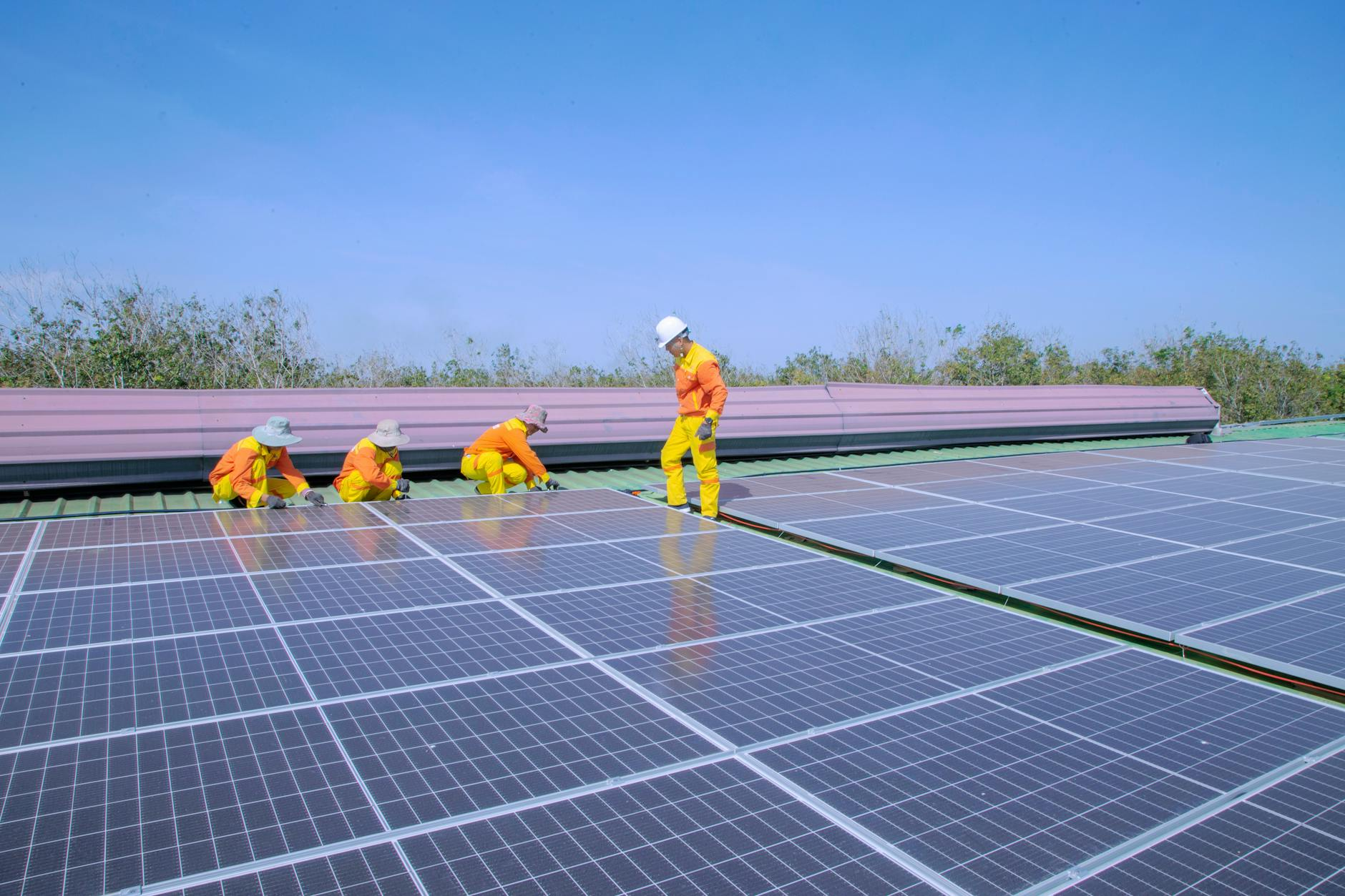
Solar panels do not make a house more likely to be hit. They sit only a few inches above the roof and do not change its height in any meaningful way. Like any electrical equipment, though, a solar system can be damaged by a nearby strike or a surge, and inverters are the part most often affected.
A properly installed system reduces this risk. The panel frames and racking are bonded and grounded according to the electrical code, and surge protection can be added on both the DC side and the AC side. If your home has a lightning protection system, the solar array should be bonded to it by someone who understands both.
If a storm has passed and your system has stopped producing, shows an error on the inverter or looks damaged, do not touch the panels or wiring. MSM Solar repairs systems of any brand, including ones we did not install. Our service call page explains how it works, and our solar FAQ covers other common questions about storms.
What to do during a thunderstorm
- Go indoors at the first sound of thunder and stay in for 30 minutes after the last one.
- Stay off corded phones and away from anything plugged into the wall.
- Avoid showers, baths and washing dishes. Lightning can travel through plumbing.
- Keep away from windows, doors, porches and concrete floors and walls, which can contain metal.
- Unplug sensitive electronics before the storm arrives, not during it.
- If you are on the water or the beach, in Destin, Navarre or Port St. Joe for example, head in early. Open water and sand offer no shelter.
After a strike
If you think your house has been hit, check for smoke or a burning smell, including in the attic, and call 911 if there is any doubt. Fires from lightning can smolder inside walls for hours. Then look for tripped breakers, dead outlets and appliances that no longer work, photograph any damage, and have an electrician inspect the wiring before you assume everything is fine.
Frequently asked questions
Is lightning protection for homes worth it in Florida?
Whole-home surge protection is worth it for almost every Florida home. A full rod-and-cable system is worth it mainly for tall, exposed, waterfront or rural homes and those with valuable equipment.
Do lightning rods attract lightning?
No. They do not increase the chance of a strike. They give a strike that was going to happen anyway a safe route to the ground.
Can I install a lightning protection system myself?
It is not recommended. A poorly designed or badly grounded system can be worse than none. Use a certified installer who follows NFPA 780.
Do solar panels need lightning protection?
They need correct grounding and bonding, which a code-compliant installation includes. Adding surge protection is a sensible extra in a high-lightning area like the Panhandle.
Conclusion
Lightning protection for homes in Florida starts with a whole-home surge protector and good grounding, and extends to a full rod-and-cable system for houses that are tall, exposed or full of costly equipment. Knowing which kind of damage each one prevents lets you spend on what your home really needs.
If you have solar, or are planning it, we can make sure it is grounded and protected correctly and repair it if a storm does cause damage. Call MSM Solar at (850) 737-5197 or request a free quote, and we will call you back no later than two business days.