
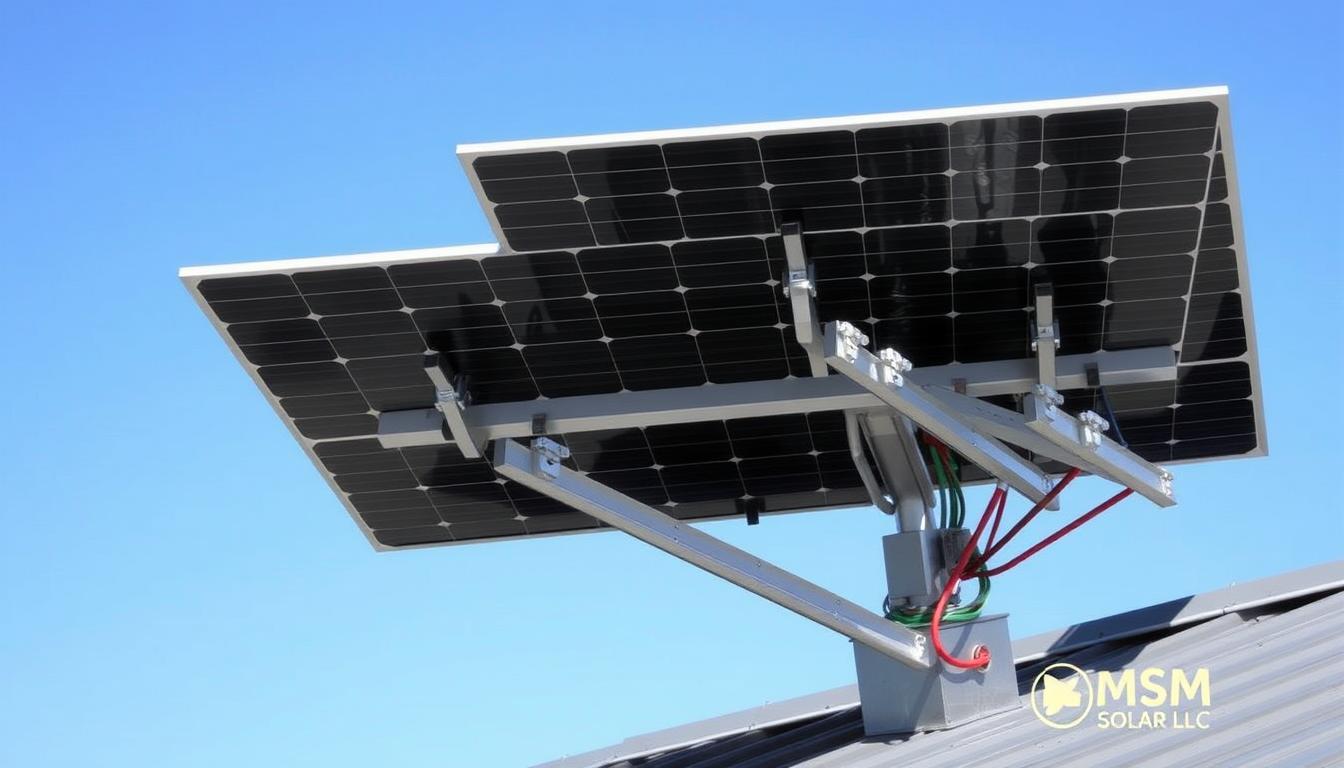
Buying a home that already has solar panels can be a good deal, but only if you know three things before closing: who owns the system, what condition it and the roof under it are in, and how the utility account and net metering will transfer to you. Get those answers in writing and the panels become a useful feature of the house instead of a surprise.
Solar is more common on homes for sale across the Florida Panhandle than it was a few years ago. Here is what to ask, what to inspect and what to put in the contract so you know exactly what you are buying.
Owned, financed or leased: the first question to ask
The single most important fact about any solar system on a house you are buying is who owns it. There are three common situations:
- Owned outright. The seller paid cash or has paid off the loan. The system is part of the house and transfers with it like a water heater or an AC unit.
- Financed with a loan. The seller owns the system but still owes money on it. Some solar loans are secured by a lien or a UCC fixture filing recorded against the property. That balance usually has to be paid off at or before closing, the same as any other lien.
- Leased or under a power purchase agreement. A third-party company owns the equipment and the seller pays a monthly fee or buys the power it produces. To keep the system, you would have to qualify for and take over that contract, or the seller would have to buy it out.
Ask the seller or listing agent directly, and then confirm it with paperwork and a title search. A friendly "it's paid for" is not enough. Your title company can tell you whether any solar-related filing appears on the property records.
Documents to request from the seller
A well-documented system is much easier to own. Ask for copies of:
- The original installation contract and the final invoice.
- The building permit and the final inspection approval from the county or city.
- The utility's interconnection or net metering agreement and the permission-to-operate letter.
- Equipment spec sheets showing the panel, inverter and any battery models.
- Any manufacturer warranty registrations and the installer's workmanship warranty terms, if any.
- Login details or a transfer process for the monitoring app.
- Any loan payoff letter, lease contract or power purchase agreement.
- Records of repairs, service calls or a removal and reinstall for re-roofing.
Missing paperwork is not automatically a deal breaker, but an unpermitted system or one the utility never approved is a real problem. It may need to be inspected, corrected or even removed before you can rely on it.
Check the age and condition of the equipment
Panels are usually the longest-lasting part of a system. Inverters, optimizers and batteries tend to need attention sooner. Look at the model numbers and installation date so you know roughly where each part is in its life.
On a walk-through or during inspection, look for:
- Cracked glass, browned or discolored cells, or panels that look different from the rest.
- Loose or sagging wiring under the array, or wiring that is exposed to the sun and chewed by animals.
- Corrosion on racking, clamps or electrical boxes, which matters near the coast in places like Navarre, Destin and Gulf Breeze.
- Error lights or fault codes on the inverter.
- A properly labeled AC disconnect and clear labels at the main panel.
A general home inspector may note that solar is present but often will not test it. A solar-specific inspection from a licensed solar contractor tells you whether the system is producing what it should and whether anything needs repair.
Roof condition under the panels
In Florida the roof matters as much as the panels. If the shingles are near the end of their life, the panels will have to come off before the roof is replaced and go back on afterward. That removal and reinstall is a real cost that belongs in your negotiations.
Ask how old the roof is, whether it was replaced before or after the panels went on, and whether there have been leaks near any roof penetrations. Look in the attic under the array for water stains. If the roof will need replacing in the next few years, get a written estimate for removing and reinstalling the solar so you can factor it into your offer.
Utility interconnection and net metering transfer
A grid-tied system is connected to the utility under an interconnection agreement. When the house changes hands, the electric account changes hands too, and the utility will want to know who the new owner of the solar system is.
Before closing, find out which utility serves the address. In the Panhandle that might be FPL, which took over the former Gulf Power territory, or a local electric cooperative such as CHELCO, Gulf Coast Electric, West Florida Electric, Escambia River Electric or Talquin. FPL credits net-metered exports at the retail rate. Co-ops and city utilities set their own rules, and those rules can differ from FPL's.
Call the utility, tell them you are buying a home with an existing solar system, and ask what paperwork they need from you to keep net metering in place. Do this early so the system is not left switched off while forms are processed.
Insurance, inspections and the four-point
Tell your insurance agent about the solar system before you bind a policy. Ask whether the panels are covered as part of the dwelling, whether the coverage limit needs to go up, and whether the insurer has any requirements for roof-mounted equipment.
If the house is older and needs a four-point inspection for insurance, the inspector will look at the roof and electrical system. Solar equipment connected to the main panel should be installed neatly and labeled. Anything that looks improvised can raise questions with an underwriter.
What the system is actually producing
The best evidence of a healthy system is its production history. Ask the seller for 12 months of monitoring data or 12 months of utility bills. Look for steady production with the expected seasonal pattern, and watch for months where output drops sharply or goes to zero.
Compare the bills to the size of the home and how the seller used it. A large family that ran the pool pump all summer will have a different bill than a retired couple, so use bills as a rough guide, not a promise. Your own usage will decide your savings.
Solar Cost Calculator – Florida Panhandle Only
* Estimate based on $3.25 per watt for solar installation.
* For Tesla Powerwall 3 Batteries, $15,000 for the first battery, $12,000 for each additional battery.
* Other variations and types of Batteries are available.
If the original installer is out of business
Many solar companies that sold systems in Florida have closed. If the installer on the paperwork is gone, the system is often called an orphaned system. That does not mean it is worthless. Panel and inverter manufacturers may still honor their own warranties, and an independent contractor can service the equipment.
MSM Solar repairs systems of any brand and age, including orphaned systems whose installer has closed. If you are buying a home with one of these, you can book a solar service call to have it checked, with pricing quoted up front. If you later want more capacity or a battery, see our page on solar system additions.
Questions to add to your purchase contract
Talk to your real estate agent or attorney about putting solar-specific items in the contract. Common ones include:
- A statement of who owns the system and that it conveys with the home.
- A requirement that any solar loan or lien be paid off at closing.
- Delivery of the documents listed above before the inspection period ends.
- A right to have the solar system inspected by a licensed solar contractor.
- Transfer of monitoring accounts and any warranty registrations.
- For a lease, the buyer's approval of the lease terms as a condition of the sale.
These are common examples, not legal advice. Your agent or attorney can tell you what fits your situation.
Frequently asked questions
Can I get the federal solar tax credit for a house that already has solar?
No. The federal residential solar credit was for the person who paid for a new installation, and it ended for systems installed after December 31, 2025. Do not count any federal credit when you value an existing system.
Will solar raise my property taxes in Florida?
Florida excludes the added value of a residential solar system from property tax assessments, so the panels themselves should not increase your assessed value. Check with your county property appraiser if you have questions about a specific home.
What if the system is leased and I do not want the lease?
You can ask the seller to buy out the lease or have the leasing company remove the equipment before closing. Get the outcome in writing, including who pays for any roof repair after removal.
Can I add a battery to a system I inherit with the house?
Often yes, depending on the inverter and electrical panel. MSM installs batteries including the Tesla Powerwall. A first Powerwall 3 typically runs about $15,000 installed, and a site survey will show whether it fits your setup.
Conclusion
MSM Solar works with homeowners in Mary Esther, Mexico Beach, Perdido Key and Tallahassee, and in every town between Pensacola and Apalachicola.
Solar on a home for sale is worth a closer look, not a quick assumption. Confirm ownership, collect the paperwork, inspect the equipment and the roof, and line up the utility transfer before closing. If you are buying in Crestview or anywhere else MSM serves across the Florida Panhandle, MSM Solar, a Florida Certified Solar Contractor (License CVC57236) based at 5662 Old Bethel Rd in Crestview, can inspect the system and give you a written quote for any repairs. Call (850) 737-5197; a real person calls back within 2 business days.