
Ask a Panhandle homeowner whether they have flood cover and a common answer is that their lender did not require it. Flood insurance in the Florida Panhandle is one of the most misunderstood parts of protecting a home here, because the rules about who must buy it say very little about who is likely to need it. Between storm surge on the coast, heavy rain inland and rivers such as the Choctawhatchee and the Apalachicola, water is the hazard that touches the most homes. This guide covers what flood insurance is, what it costs to go without, and how to decide.
Solar Cost Calculator – Florida Panhandle Only
* Estimate based on $3.25 per watt for solar installation.
* For Tesla Powerwall 3 Batteries, $15,000 for the first battery, $12,000 for each additional battery.
* Other variations and types of Batteries are available.
Homeowners insurance does not cover flood
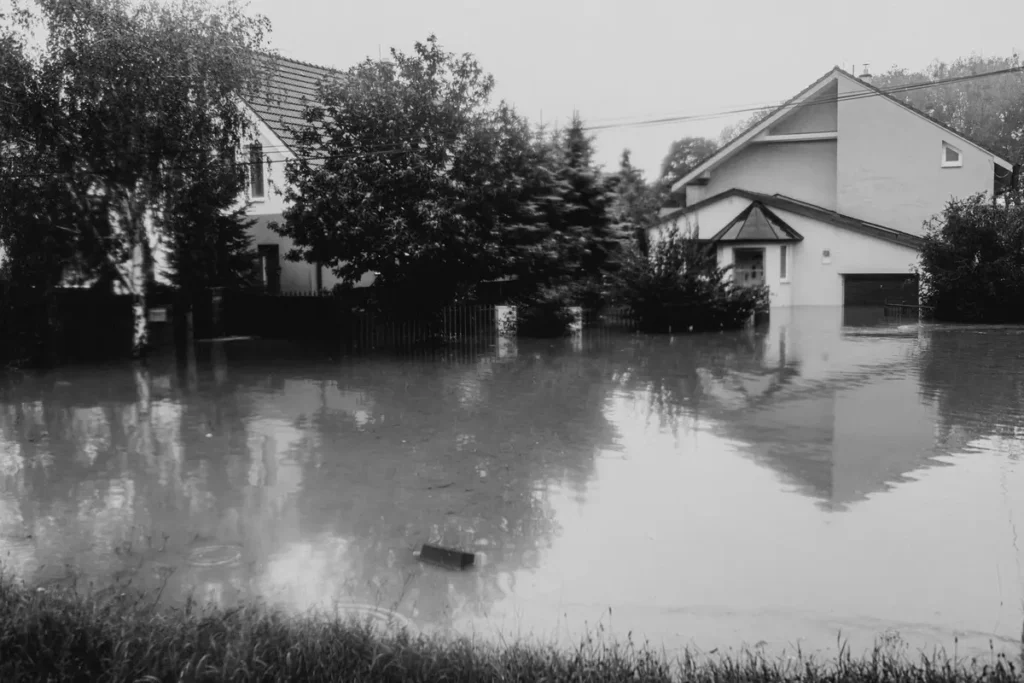
This is the point that surprises people every storm season. A standard homeowners policy covers wind damage and rain that enters through a wind-damaged roof or window. It excludes flood, which insurers define broadly as water rising from outside: storm surge, overflowing rivers and bays, and surface water from heavy rain. If surge pushes two feet of water through a house in Gulf Breeze, the wind policy does not pay for it. Only a flood policy does.
Who is required to have it
If your home is in a high-risk flood zone and you have a mortgage from a federally regulated or insured lender, flood insurance is mandatory. High-risk zones on the flood maps begin with the letters A or V. Homes in moderate and low-risk zones, shown as X, are not required to carry it. That is a lending rule, not a statement that the home cannot flood. A meaningful share of flood claims nationally come from properties outside the high-risk zones, and heavy rain events in the Panhandle have flooded neighborhoods that had never been mapped as at risk.
Understanding your flood zone
- Zone V or VE: coastal areas exposed to waves and surge. The highest risk and the strictest building rules.
- Zone A or AE: high-risk areas near rivers, bays, bayous and low-lying ground.
- Zone X (shaded): moderate risk.
- Zone X (unshaded): lower risk, but not zero.
You can look up any address free of charge on the FEMA Flood Map Service Center or on your county's property appraiser or GIS website. Escambia, Santa Rosa, Okaloosa, Walton and Bay County all publish flood zone layers online.
Where to buy flood insurance
There are two sources. The National Flood Insurance Program, run by FEMA and sold through ordinary insurance agents, offers up to $250,000 of cover for the building and up to $100,000 for contents on a residential policy. Private flood insurers offer an alternative and can provide higher limits and extra features such as living expenses while you are out of the house. Ask an independent agent to quote both. If your home is worth more than the federal limit, ask about excess flood cover.
What affects the price
- Distance from the water and the type of flooding you are exposed to.
- The height of the lowest floor relative to expected flood levels. An elevation certificate from a surveyor can document this and may lower the premium.
- The type of foundation: slab, crawl space, piers or pilings.
- Whether machinery such as the air conditioner and water heater is raised.
- Flood openings in enclosed areas below the living floor.
- The cost to rebuild the home and the deductible you choose.
- Your community's rating. Some Panhandle cities and counties earn discounts for residents through floodplain management.
The waiting period
A new federal flood policy normally takes effect 30 days after you buy it, with limited exceptions such as a purchase connected to a new mortgage. You cannot buy it when a storm is already in the Gulf and expect to be covered. Private policies may have shorter waits, but insurers stop writing new business when a storm is named. The time to buy is the off-season.
What is and is not covered
Building cover includes the structure, foundation, electrical and plumbing systems, the air conditioner, water heater and built-in appliances. Contents cover is separate and optional, so check that you have both. Typical exclusions include landscaping, fences, pools, vehicles, and most belongings kept in an enclosed area below an elevated home. Temporary housing is not included in the standard federal policy.
Reducing your flood risk
- Raise outdoor equipment on platforms above the expected flood level.
- Fit flood vents in enclosed areas under elevated homes.
- Keep gutters, swales and drains clear, and slope soil away from the house.
- Install a backflow valve on the sewer line if your street floods.
- Store documents and valuables high, and keep a photo inventory in the cloud.
- After a flood, switch off power at the main breaker before entering if you can do so safely, and have an electrician check any equipment that was under water.
Flood, power and solar equipment
Floodwater and electrical equipment do not mix. In flood-prone parts of Navarre, Panama City and Port St. Joe, inverters, batteries and disconnects should be mounted above the expected flood level, and that decision is made at the design stage. Rooftop panels are well clear of the water, but the equipment on the wall and in the garage needs the same thought as an air conditioner or a water heater. If your solar equipment has been submerged, do not switch it back on. Have it inspected first. MSM Solar provides post-storm inspections with a written report for insurance, for any brand of system.
A flood also tends to mean a long outage. Homes with battery storage mounted high and dry have power while the street is dark, which is a real comfort during clean-up. Read more in solar and hurricane readiness, whole-home versus essential-loads backup and documenting solar damage after a storm. For a system designed around your flood zone in Navarre, Gulf Breeze or Port St. Joe, ask for a free site survey.
Frequently asked questions
Do I need flood insurance if I am not in a flood zone?
Every property is in a flood zone of some kind. Outside the high-risk zones it is optional and usually cheaper, and it is worth a quote given how much rain and surge the Panhandle sees.
Does flood insurance cover hurricane damage?
It covers rising water, including storm surge. Wind damage is handled by your homeowners or windstorm policy. Many hurricane losses involve both.
How long before flood insurance takes effect?
Usually 30 days for a federal policy. Buy well before storm season.
Is my solar system covered for flood?
Equipment attached to the building is generally treated as part of the building, but policies differ. Ask your agent to confirm in writing and tell them the system's value.
Conclusion
Flood insurance in the Florida Panhandle is required for some homes and sensible for many more. Look up your zone, get quotes from both the federal program and private insurers, and buy before the season, because of the waiting period. Then reduce the risk itself by raising equipment and keeping water moving away from the house.
MSM Solar works with homeowners in Miramar Beach, Pace, Ponce de Leon and Quincy, and in every town between Pensacola and Apalachicola.
If you want solar or battery equipment designed with flood levels in mind, or a storm-damaged system inspected, call MSM Solar at (850) 737-5197 or request a free quote, and we will call you back no later than two business days.