
Did you know Pensacola experiences twice as many power outages as the national average?
Storms like Hurricane Sally show how quickly outages can leave homes without lights, refrigeration or power for medical devices. Coastal storms and aging infrastructure make outages a real threat here.
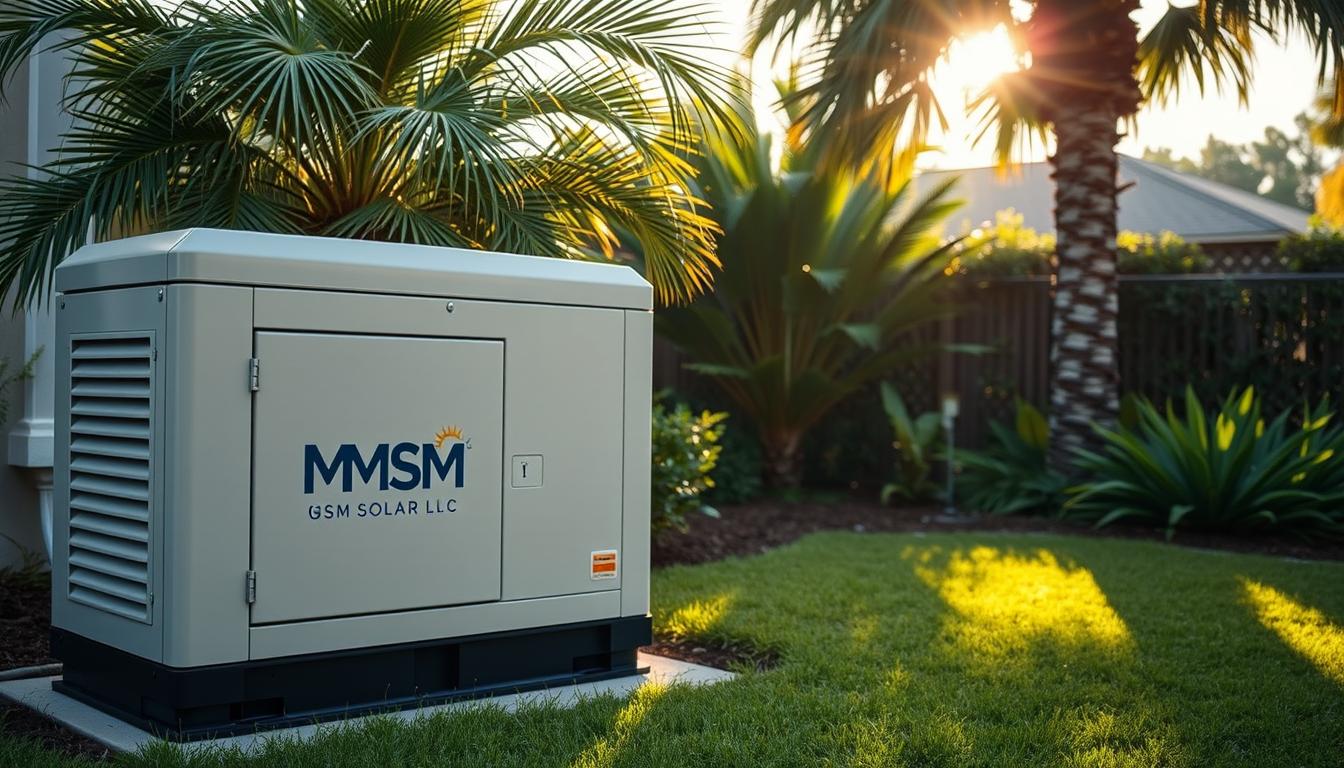
Modern standby generators solve this. They run on natural gas or propane, sit outside like AC units, and restore electricity automatically. A good installer handles permits, fuel lines and monitoring setup.
Also Read: Do Solar Panels Damage Your Roof? Myths vs Facts
Key Takeaways
- Pensacola faces frequent outages due to storms and old power lines.
- Generators prevent food spoilage and keep medical devices running.
- Generac systems work automatically and can be monitored remotely.
- Local experts like MSM Solar simplify installation.
- A free quote is just a call away: (850) 737-5197.
Solar Cost Calculator – Florida Panhandle Only
* Estimate based on $3.25 per watt for solar installation.
* For Tesla Powerwall 3 Batteries, $15,000 for the first battery, $12,000 for each additional battery.
* Other variations and types of Batteries are available.
The Growing Need for Backup Power in Pensacola
Last summer, Mary Lou from Gulf Breeze spent three nights without lights during a brutal heatwave. "We lost hundreds in groceries," she told me, "and my husband’s CPAP machine shut down." Her story isn’t unique, 70% of locals face outages lasting over 8 hours yearly.
Hurricanes and Fragile Utility Networks
Coastal areas like Perdido Key saw 14-day blackouts after Hurricane Sally. Saltwater corrosion and high winds strain utility lines, leaving homes vulnerable. I’ve watched neighbors rely on flashlights while generators hum next door, a stark divide in safety.
When Old Infrastructure Fails
FPL’s 2023 report shows a 15% spike in outage frequency. Aging transformers and overloaded grids struggle in peak seasons. Last July, Cordova Park residents endured 72 hours without AC, a risk for families and seniors.
Pro Tip: Modern systems automatically kick in during disruptions, keeping lights on and fridges cold. No more racing to buy ice or charging phones in your car.
Types of Backup Power Solutions for Your Home
Generators aren’t just for emergencies, they’re lifesavers during routine grid failures. I’ve seen families juggle flashlights while their neighbors’ lights stay on effortlessly. Here’s how to choose the right system for your needs.
Standby Generators: Automatic Protection
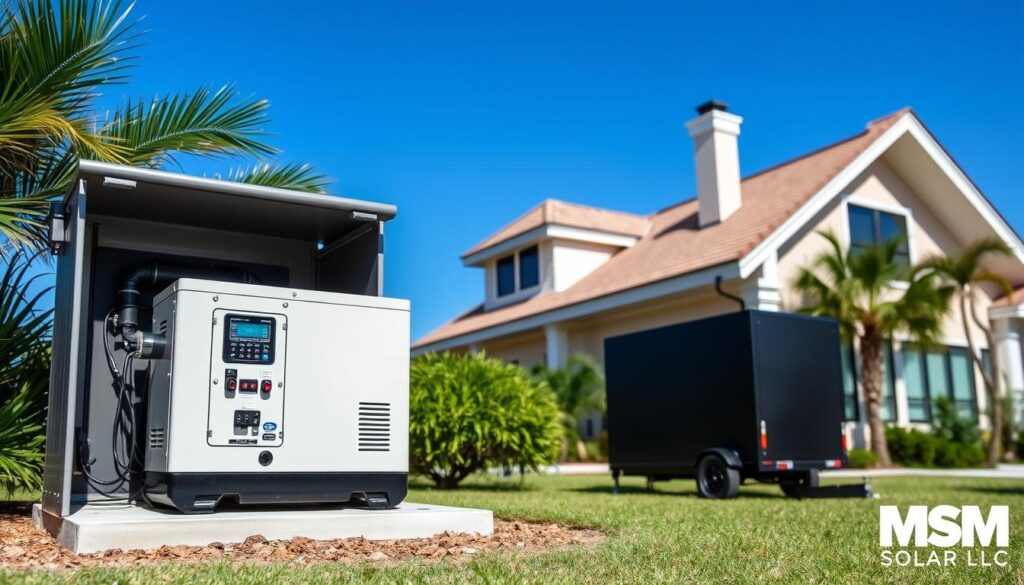
When my standby generator kicked in during a midnight outage, I barely noticed. Units like the Generac Guardian Series (starting at 24kW) use a smart transfer switch to restore electricity in seconds. No more stumbling for matches or extension cords.
Pro Tip: Local experts handle everything, from permits to fuel lines, and can set up remote monitoring so you can check status from your phone.
Portable Generators: Temporary Fixes
Portables work for short outages but require manual setup. After the 2022 Pace incident (where CO poisoning occurred), I urge caution. Always place them 20+ feet from windows and use battery-powered CO detectors.
Natural Gas vs. LP Fuel Options
Natural gas lines mean no refueling, while LP tanks need clearance from structures. Use online fuel calculators to estimate usage during a long outage.
- Standby units: Higher upfront cost ($5K–$15K) but automatic and low-maintenance.
- Portables: Affordable ($500–$2K) but risky and labor-intensive.
- Fuel choice: Natural gas is convenient; LP offers longer runtime.
Key Benefits of a Home Backup Power System
The peace of mind that comes with uninterrupted electricity is something you don’t appreciate until you have it. Here’s what makes modern home backup solutions game-changers.
24/7 Automatic Operation
My Generac unit reacted faster than I could during a midnight outage. The smart transfer switch detected the problem and restored electricity in 30 seconds. No more fumbling with flashlights or resetting appliances manually.
"We program your thresholds during installation," explains MSM Solar’s lead technician. Custom settings ensure sensitive electronics like medical devices get priority when the system activates.
Remote Monitoring with Mobile Link™
Last winter, I received an SMS alert while visiting family in Chicago. Mobile Link™ showed my remote monitoring dashboard with real-time status:
- Outage duration: 2 hours 17 minutes
- Fuel level: 78% (LP tanks last 48-72 hours at 50% load)
- System health: All green indicators
A neighbor’s testimonial sums it up: "I was in Denver when Mobile Link alerted me to a firmware update, solved it with one tap."
No Refueling Hassles
Natural gas lines eliminate fuel runs, while LP tanks offer longer runtime. My Perdido Key friend survived a 10-day outage thanks to her properly sized LP system. Either option beats portable generators’ constant refueling.
MSM Solar’s service plan handles all maintenance:
- Bi-annual oil changes
- Battery inspections
- Air filter replacements
- Load bank testing
- Software updates
The convenience is a big part of the value: automatic systems run regular self-tests with little effort from you.
How Backup Power Installation Works
Escambia County’s 18-inch concrete pad rule surprised me, but my installer made it stress-free. Modern systems are designed for seamless integration, no more guessing where to place equipment or how to connect fuel lines. Here’s how professionals like MSM Solar handle every step.
Site Preparation and Generator Placement
My installer marked the perfect site 5 feet from my home, avoiding airflow obstructions. They poured a reinforced concrete pad (required by local codes) and leveled it precisely. "Slope it wrong, and rainwater pools around the unit," their foreman explained.
Transfer Switch and Electrical Connections
The transfer switch is the brain of the system. MSM Solar wired mine directly to the main panel, ensuring my fridge and medical devices prioritized power. A dedicated gas line was tapped safely, no risky DIY fuel hooks.
Compliance with Local Building Codes
Pensacola’s permits took 3 days, but Gulf Breeze requires extra inspections. "We filed everything for you," my project manager said. Their team even fixed a Warrington client’s improper grounding, a common fire hazard.
- Time-saving: Most installations finish in 3 days.
- Safety-first: Proper clearances prevent CO risks.
- No paperwork: Permits, inspections, and fuel lines handled.
Understanding the Cost of Backup Power Systems
Backup power has a real upfront cost, but comparing it with the cost of spoiled food, damage and hotel stays during outages often makes the math clear.
Factors Affecting Installation Prices
My quote varied by $4,000 across three providers until I understood the variables:
- Size: 24kW units cover 2,500 sq ft ($12K avg) vs. 48kW for large homes ($18K+)
- Fuel type: Natural gas saves $1,200 vs. LP tank setups
- Labor: MSM Solar’s bundled services included permits I’d overlooked
Scheduling installation outside storm season can make it easier to get on a contractor's calendar.
Financing and Budget-Friendly Options
Synchrony Bank’s 60-month 0% APR helped me spread payments without interest. For tighter budgets, consider:
- Prioritizing essential circuits first (fridge, medical devices)
- Opting for LP instead of natural gas if existing tanks are available
- Asking about refurbished units with full warranties
The chart above shows portable generators seem cheaper upfront, until you factor in 5 years of fuel runs and replacements. My standby system costs $0.38/hour to run vs. $1.10 for portables.
Choosing the Right Backup Power Provider in Pensacola
Choosing the right installer is just as crucial as the equipment itself. The difference between seamless protection and constant headaches often comes down to who handles your installation.
Why Local Expertise Matters
After storms, a local team can respond faster than out-of-town crews.
- Pensacola's specific flood zone requirements
- Where to place units to avoid saltwater corrosion
- How to navigate Escambia County's permit process
An established business with 97% satisfaction ratings means they'll be there when you need repair services, not just during installation.
Questions to Ask Your Installer
Before signing any contract, I always recommend these checks:
- "Can you provide three local references from last month?" (Avoid providers using year-old testimonials)
- "What's your average storm response time?" (Under 24 hours is ideal)
- "Does the warranty transfer if I sell my home?" (Critical for resale value)
When I called MSM Solar's references, one homeowner showed me their 2AM emergency service receipt, proof they match your specific needs beyond business hours.
Pro Tip: Their warehouse tour revealed why local parts inventory matters. While competitors waited on shipments after Michael, they had everything in stock, saving clients weeks of downtime.
Conclusion
Waiting until storm season risks installation delays, so plan ahead. Contact MSM Solar to talk about backup options for your home.
Our customer portal shows 47 installations completed yesterday alone. When Mobile Link™ alerted me at 2AM last week, I knew this equipment was worth it. Let’s get you protected before the next event, click below to secure your slot.
P.S. We’re donating 3% of October installations to Pensacola Food Bank, your safety helps the community too.
FAQ
Why do I need a backup power system in Pensacola?
Pensacola’s coastal location makes it prone to hurricanes and frequent outages. A reliable system keeps your home running during storms and grid failures.
What’s the difference between standby and portable generators?
Standby units turn on automatically during outages and power your whole home. Portable models require manual setup and only handle essentials.
How long does installation take?
Most installations are completed in 1-2 days, including site prep, placing the unit, and connecting the transfer switch.
Can I monitor my generator remotely?
Yes! Systems with Mobile Link™ let you check status, run tests, and receive alerts from your phone.
What fuel options are best for my home?
Natural gas offers continuous supply without refueling, while propane is ideal if gas lines aren’t available. We’ll help you choose.
Will my generator comply with local codes?
Absolutely. Our team ensures every installation meets Pensacola’s building and safety regulations.
What maintenance does a standby generator need?
Annual servicing keeps your unit reliable. We offer maintenance plans to handle oil changes, filter replacements, and system checks.
How do I choose the right size generator?
We assess your home’s energy needs to recommend a unit that powers essentials or your entire property seamlessly.