
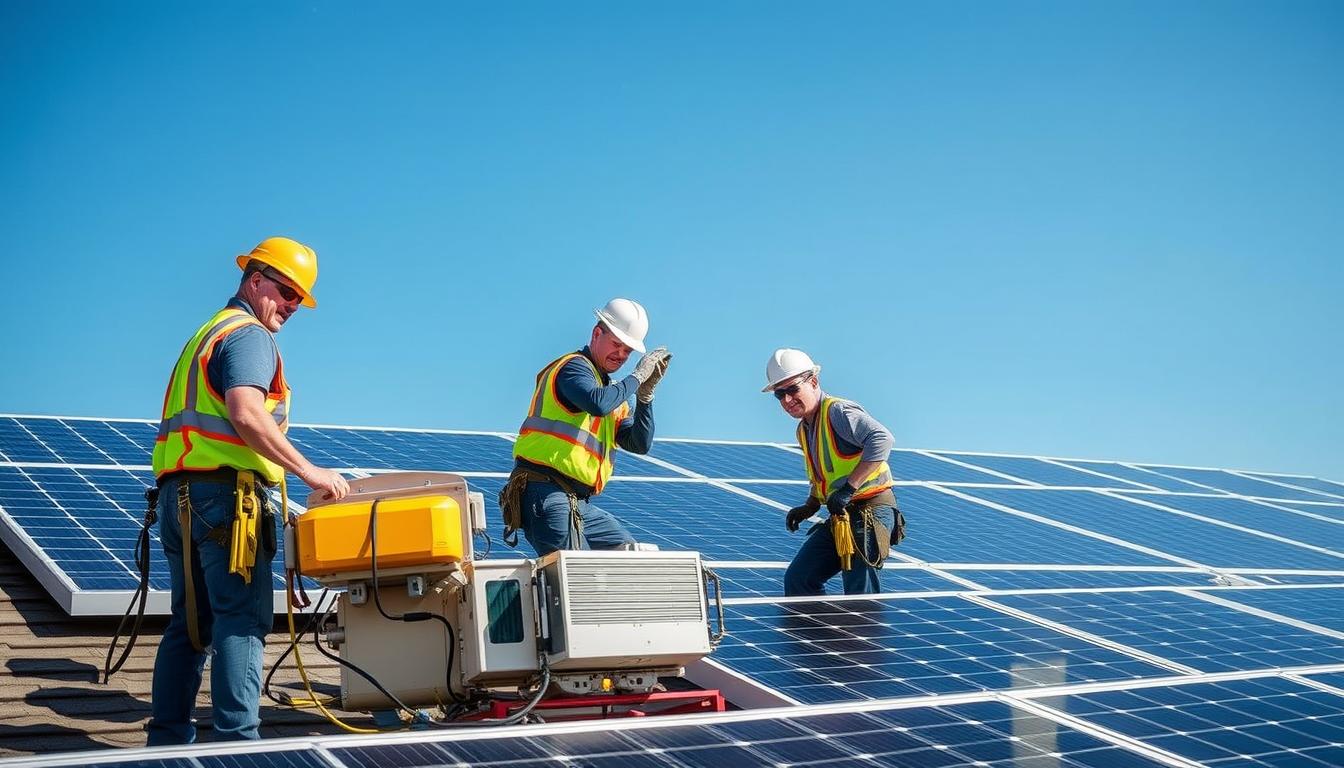
Solar panels in the Florida Panhandle keep producing all winter, but expect noticeably less energy from November through February than in late spring and summer. Shorter days and a lower sun angle are the main reasons. Cold weather itself does not hurt output; panels actually convert sunlight a little more efficiently when they are cool. A seasonal dip is normal, and the useful question is whether your system is dipping by the right amount.
Why solar production drops in winter
Two things change between July and December: how many hours the sun is up and how high it climbs in the sky. Around the winter solstice, Panhandle days are several hours shorter than in June, so there is simply less time for panels to collect light.
The sun also sits lower in the southern sky. Its light reaches the panels at a shallower angle and passes through more of the atmosphere on the way, so each hour of winter daylight delivers less energy than an hour of summer daylight. Panels on a steep south-facing roof handle this better than panels on a low-pitch roof or on east- and west-facing slopes, because the steeper surface points more directly at the low winter sun.
None of this is a defect. It is the same pattern every grid-tied system in the region follows, and it reverses on its own as days lengthen after late December.
Cold weather is not the problem
Many homeowners assume solar panels need heat to work. They need light, not heat. Panel voltage rises as cell temperature falls, which is why panels are rated to lose a little efficiency for every degree they warm up. On a bright, cool January afternoon in Crestview or Marianna, your panels are running cooler and converting light slightly more efficiently than on a humid August afternoon.
Clear, dry winter days after a cold front often produce surprisingly strong midday output for the season. Low daily totals come from the shorter day and the low sun angle, not from the temperature.
Frost and heavy dew on a cold Panhandle morning can delay production for a short time until the sun warms the glass. This is normal and clears on its own. Do not scrape panels or pour hot water on them; the temperature shock and scraping can damage glass and coatings.
Winter shade from trees and nearby buildings
Shade is the winter factor homeowners most often underestimate. Because the sun stays low, shadows are longer from November through February. A pine line, a neighbor's two-story house or a chimney that never touched the array in summer can cast a shadow across part of it for hours in winter.
The Panhandle has a lot of tall pines, and pines keep their needles all year, so they shade just as much in winter as in summer, with longer shadows. Deciduous trees such as oaks that drop leaves let more light through in winter, although bare branches still cast some shade.
How much a shadow hurts depends on your equipment. With a string inverter, shading part of one panel can pull down the output of the whole string. Systems with microinverters or panel-level optimizers lose less, because each panel works more independently. If your monitoring shows a sharp drop at the same time every winter afternoon, a shadow is a likely cause.
How to tell normal winter output from a real problem
The most common mistake is comparing December production with July production. They will never match. A fair comparison uses the same month in a previous year, or the production estimate your installer gave you broken down by month.
Signs that point to a seasonal dip:
- Daily production is lower, but sunny days still produce clearly more than cloudy days.
- Output this December is close to last December's output.
- Every panel or string is lower by a similar amount in a panel-level monitoring app.
- Production rises steadily again from February into spring.
Signs that point to something worth checking:
- Production is well below the same month last year with similar weather.
- One panel or one string reads far lower than the others on a clear day.
- The inverter shows an error light or fault code, or the monitoring app has stopped reporting.
- Output drops to zero on sunny days.
- Production fell sharply after a storm, roof work or a tree falling nearby.
If you see any of these, a service visit is the sensible next step. MSM Solar repairs systems of any brand and age, including systems whose original installer has closed. See our solar system service calls page for how visits work; service-call pricing is quoted up front.
Winter output and your electric bill
How winter production shows up on your bill depends on your utility and on how much power your home uses in winter.
FPL, which now serves the former Gulf Power territory across much of the western Panhandle, credits net-metered exports at the retail rate. Under Florida's net metering rule, surplus credits from months when you export more than you use carry forward to later months, and unused credits are settled once a year at a lower rate. In practice, many FPL customers build up credits in spring and use them up in the higher-use months later in the year.
Electric cooperatives such as CHELCO, Gulf Coast Electric, West Florida Electric, Escambia River Electric and Talquin, along with city-owned utilities, set their own net metering rules. Credit rates, monthly charges and how surplus is handled differ, so read your co-op's net metering policy before judging how winter production affects your bill.
Winter usage matters as much as winter production. Heat pumps, electric strip heat and space heaters can raise usage sharply on cold nights, and solar cannot help at night. A bill that climbs in January is often a heating story rather than a solar story.
Solar Cost Calculator – Florida Panhandle Only
* Estimate based on $3.25 per watt for solar installation.
* For Tesla Powerwall 3 Batteries, $15,000 for the first battery, $12,000 for each additional battery.
* Other variations and types of Batteries are available.
Should you clean or adjust panels for winter?
Rooftop panels in the Panhandle are usually installed flush to the roof and are not designed to be tilted seasonally. Adjustable tilts are mainly found on some ground-mount systems, and even then the gain rarely justifies climbing up to change them.
Cleaning is a judgment call. Rain does most of the work, but drier spells and the end of fall leaf drop can leave dust, pine needles and leaves sitting along the bottom edge of the array. Debris that covers part of a panel causes the same problem as shade. If you can see a buildup from the ground, have it removed safely from the ground with a soft brush and water, or call a professional. Never walk on panels, and avoid climbing on a roof in cold, damp conditions.
Winter is also a good time to check for pine straw and leaves trapped under the array, where they can hold moisture against the roof and invite nesting birds and squirrels.
Planning a new system around winter production
If you are still deciding whether to go solar, a good proposal shows expected production for every month, not just a yearly total. That lets you see how much the system will cover in December compared with April and plan your budget around the lower months.
Roof orientation and pitch, shade from your own trees and your neighbors' trees, and your utility's net metering rules all affect how winter months turn out. A site survey should account for the low winter sun, not just a midsummer view of the roof. MSM Solar offers free site surveys and written quotes; typical pricing is about $3.25 per watt installed. You can read more about the process on our new installations page.
The 30% federal residential solar tax credit ended for systems installed after December 31, 2025, so payback now rests on bill savings. Florida still exempts solar equipment from sales tax and excludes the added home value from property tax assessments, but there is no state solar tax credit or statewide rebate.
Adding panels if winter output feels too low
If your usage has grown since your system was installed, perhaps from an electric vehicle, a pool pump or a family member moving in, the system may now cover a smaller share of your bill, and that shows most clearly in winter. Adding panels can help, as long as the roof space, inverter capacity and your utility's interconnection rules allow it.
An expansion should be designed with the existing equipment in mind, since mismatched panels or an undersized inverter can limit the benefit. Our solar system additions page explains what is involved.
Frequently asked questions
Do solar panels work when it is cold outside?
Yes. Panels need sunlight, not heat, and they run slightly more efficiently when they are cool. Lower winter output comes from shorter days and a lower sun angle.
Is it normal for my system to produce much less in December than in June?
Yes. A large seasonal difference is expected in the Panhandle. Compare December with last December, or with the monthly estimate in your proposal, rather than with summer months.
Should I clear frost off my panels in the morning?
No. Frost and dew clear on their own once the sun warms the glass. Scraping or pouring hot water on panels can damage them.
Why does my array lose power in the afternoon only in winter?
The most likely reason is a longer winter shadow from a tree, chimney or nearby building. Panel-level monitoring can confirm which panels are affected.
When should I call for service?
Call if production is well below the same month last year, one panel or string is far lower than the rest, the inverter shows a fault, or output dropped after a storm or roof work.
Conclusion
MSM Solar works with homeowners in Altha, Apalachicola, Blountstown, Bonifay and Cantonment, and in every town between Pensacola and Apalachicola.
Winter is the low season for solar in the Florida Panhandle, and that is expected. Shorter days, a lower sun and longer shadows reduce production, while cool temperatures help a little. Judge your system against the same month in past years, keep an eye on shade and debris, and learn how your utility handles surplus credits. Homeowners from Crestview to Marianna and Niceville can call MSM Solar at (850) 737-5197 if winter output looks lower than it should; a real person calls back within 2 business days.