
Gutters and downspouts matter more in the Florida Panhandle than in most places because our storms dump a lot of water in a short time. A working system catches roof runoff and carries it several feet away from the house, which protects the foundation, slab edges, siding, landscaping and the fascia boards behind the gutter itself. If your gutters overflow in a normal afternoon thunderstorm, they will not keep up in a tropical system, so the time to fix them is before the next hurricane season.
This guide covers what gutters actually do, how to tell whether yours are sized and pitched correctly, where downspout water should go, what changes when you have solar panels on the roof, and a simple maintenance routine that fits the Panhandle's pine-needle and oak-leaf seasons.
What gutters and downspouts actually protect
A gutter is not there to protect the roof. Shingles, metal panels and tile all shed water on their own. The gutter's job is to collect that water at the eave and send it somewhere harmless instead of letting it fall in a sheet along the whole perimeter of the house.
Without gutters, or with gutters that overflow, roof runoff lands in a narrow strip right next to the wall. Over time that can lead to:
- Soil washing out along the slab edge or around piers on a raised home
- Water splashing back onto the lower few feet of siding, stucco or trim, which encourages mildew and rot
- Puddles at doorways, garage entries and patios
- Water soaking the fascia board when the gutter itself overflows backward
- Flower beds and mulch washing away, and a muddy trench forming under the drip line
Homes on sandy soil, which is common near the coast, tend to show erosion quickly. Homes on heavier soils further inland can hold standing water near the foundation instead. Either way, the fix starts with getting roof water into the gutter and then away from the house.
Signs your gutters are not keeping up
The easiest way to check your gutters is to watch them during a heavy rain from a safe spot on the ground. Look for:
- Water sheeting over the front edge of the gutter in the middle of a run. That usually means a clog, a gutter that is too small for the roof area above it, or too few downspouts.
- Water pouring off one end of a run. The gutter is likely pitched the wrong way or has sagged.
- Drips behind the gutter, between the gutter and the fascia. The roof's drip edge may not extend into the gutter, or the gutter has pulled away from the board.
- Standing water in the gutter a day after the rain stops. A low spot or a loose hanger is holding water, which adds weight and breeds mosquitoes.
- Stains, peeling paint or soft wood on the fascia and soffit just behind the gutter.
- Washed-out soil or a puddle right where a downspout empties.
Seams that drip, end caps that leak and hangers that have backed out of the fascia are all common on older sectional gutters. Seamless aluminum gutters reduce the number of joints but still need sound hangers and outlets.
Gutter size, pitch and downspout count
Many homes use 5-inch K-style aluminum gutters, and that size works for plenty of roofs. Larger or steeper roof areas, long runs and valleys that funnel water into one spot often do better with 6-inch gutters and larger downspouts. A 6-inch gutter holds noticeably more water, which matters in the short, intense downpours the Panhandle gets every summer.
Three things decide whether a gutter keeps up:
- Size. The gutter has to handle the water coming off the roof plane above it. Steep roofs and roofs where two planes meet in a valley send water to the gutter faster.
- Pitch. Gutters need a slight, consistent slope toward each downspout. Too flat and water sits; sagging sections create pockets.
- Downspout count and placement. Long runs need a downspout at each end or one in the middle, plus a downspout near any point where a valley dumps water. Adding a downspout is often the cheapest fix for an overflowing gutter.
If a gutter overflows at the same corner every storm, look at what is above that corner. A roof valley aimed straight at one spot can overwhelm even a clean gutter. A splash guard at the corner or an extra downspout usually solves it.
Where downspout water should go
Getting water off the roof is only half the job. A downspout that empties against the foundation just moves the problem a few feet. Downspout water should be carried several feet away from the house and released where the ground slopes away, not back toward the slab.
Common options include:
- Extensions and splash blocks. The simplest approach. An extension carries water away from the wall and a splash block keeps it from digging a hole. They work well but get knocked out of place by mowers and foot traffic.
- Flip-up or roll-out extensions. Useful next to walkways and driveways where a permanent extension would be in the way.
- Buried drain lines. Solid pipe that carries downspout water underground to a pop-up emitter in the yard or to a lower area. They need a cleanout and should be checked after storms, because a crushed or clogged buried line can back water up the downspout.
- Rain chains and rain barrels. Fine for small roof areas or garden use, but neither handles a tropical downpour on its own. A rain barrel needs an overflow that is also directed away from the house.
Check with your HOA or city before routing downspout water toward a neighbor's lot, a sidewalk or a street. Many communities have rules about where stormwater may be discharged.
Gutters, hurricanes and high wind
During a hurricane, gutters face two problems: a huge volume of water and strong wind. Wind can lift a loose gutter, bend it, or tear it off along with part of the fascia. Before storm season, it is worth checking that:
- Hangers are spaced closely enough and screwed into solid wood, not just the edge of a soft fascia board
- Downspouts are strapped to the wall at the top, middle and bottom
- Gutter guards, if you have them, are fastened down and not just resting in the gutter
- Nothing heavy, such as a loose antenna mast or a dead limb over the roof, can fall into the gutter
After a storm, walk the perimeter. Look for gutters pulled away from the fascia, crushed downspouts, and debris packed into outlets. Wind-driven rain can also push water behind a gutter that was not properly tucked under the drip edge, so look at the soffit and at interior ceilings near exterior walls for new stains. Our hurricane season home checklist covers the rest of the house.
Gutters on a home with solar panels
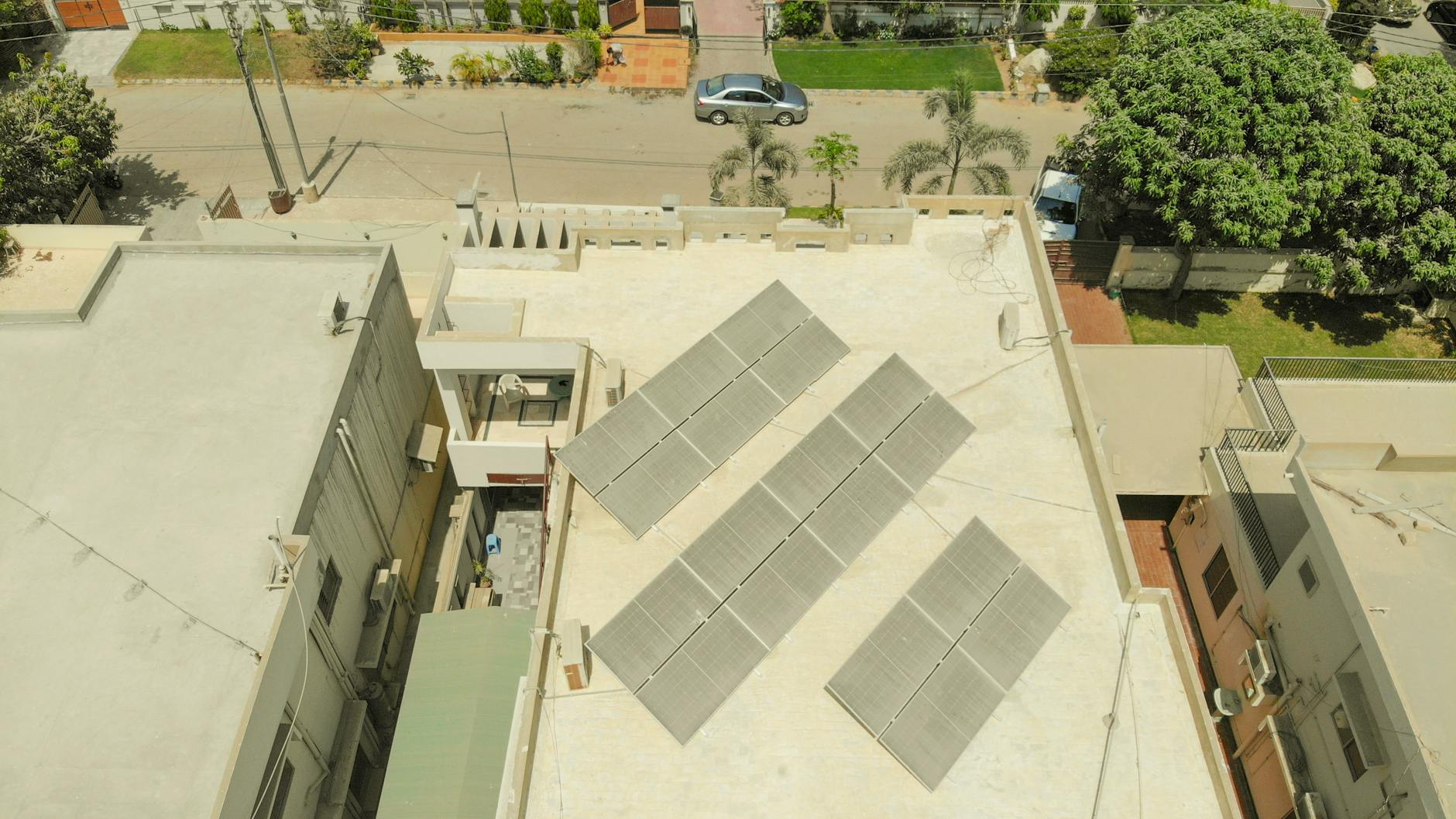
Solar panels do not change how much rain falls on your roof, but they do change how it arrives at the gutter. Water runs down the face of the panels and drops off the lower edge of the array, often in a concentrated line. That makes a clean, correctly sized gutter below the array even more important.
A few points to keep in mind if you have solar or are planning it:
- Do not lean ladders on the panels or stand on them to reach a gutter. Panels and their rails are not designed to carry a person's weight, and cracked glass or damaged cells may not show right away.
- Leaves and pine needles collect under arrays. Debris that blows under the panels eventually washes down into the gutter in one batch, so gutters below an array can clog faster.
- Wiring and conduit should not run through gutters. If you see solar wiring or conduit lying in or crossing a gutter, have it looked at. Standing water and debris are hard on wiring.
- Replacing gutters or fascia under an array is usually doable without touching the panels, but work near the array's lower edge needs care. If the roof itself needs work, the panels may need to come off and go back on.
- Gutter guards can reduce cleaning under arrays where reaching the gutter is awkward, but choose a style that does not shed water over the front edge in heavy rain.
If storm water seems to be getting under your panels or into the attic near the array, our guide to a roof leak under solar panels explains how to narrow down the source. For a post-storm check of the solar system itself, see our solar service calls page; MSM Solar quotes service-call pricing up front and works on systems of any brand and age.
A simple Panhandle gutter maintenance routine
Cleaning schedules depend on what grows near your house. Homes under pines collect needles year-round, while live oaks drop most of their leaves in spring. A practical routine for many Panhandle homes looks like this:
- Late spring, before hurricane season begins on June 1. Clean gutters and downspouts, check hangers and straps, and run a hose through each downspout to make sure it flows freely.
- After any named storm or severe thunderstorm. Walk the perimeter, clear packed debris from outlets and check for bent or loose sections.
- Late fall or early winter. Clear needles and leaves that built up through summer and fall.
- Any time you see overflow. Overflow during an ordinary rain is the clearest sign something needs attention.
Work from a stable ladder on firm ground, keep three points of contact, and stay well clear of the service drop where the power line meets the house. For two-story homes, steep roofs or homes with solar arrays near the eaves, hiring a gutter company is often the safer choice.
Solar Cost Calculator – Florida Panhandle Only
* Estimate based on $3.25 per watt for solar installation.
* For Tesla Powerwall 3 Batteries, $15,000 for the first battery, $12,000 for each additional battery.
* Other variations and types of Batteries are available.
Frequently asked questions
Do I really need gutters on a Florida house?
Not every home has them, and some roof designs shed water away from the walls well enough. But if you see soil washing out along the foundation, splash-back stains on the siding, or puddles at entry doors, gutters with downspouts that discharge away from the house are usually the fix.
Are 6-inch gutters better than 5-inch gutters?
A 6-inch gutter holds more water and works with larger downspouts, which helps on big or steep roof areas and where valleys funnel water to one spot. For smaller, lower-pitch roof sections, a 5-inch gutter with enough downspouts is often fine. The right answer depends on the roof area draining into each run.
Can I clean the gutters under my solar panels myself?
You can clean gutters below an array from a ladder as long as you never lean the ladder on the panels or step onto them. If the gutter is hard to reach without touching the array, a gutter guard or a professional cleaning service is the safer option.
Should downspouts connect to a buried drain?
Buried drains keep yards tidy and carry water farther, but they can clog or get crushed. Include a cleanout, release the water where the ground slopes away from the house, and run a hose through the line once or twice a year to make sure it still flows.
Conclusion
MSM Solar works with homeowners in Pace, Perdido Key, Ponce de Leon, Port St. Joe, Quincy, Rosemary Beach and Santa Rosa Beach, and in every town between Pensacola and Apalachicola.
Good gutters in the Florida Panhandle come down to four things: enough capacity for the roof above them, a steady pitch toward the downspouts, enough downspouts in the right places, and discharge that ends up several feet from the house on ground that slopes away. Check them in a heavy rain, clean them before hurricane season and after big storms, and pay extra attention to the gutter below a solar array. If your solar system needs a look after a storm, MSM Solar, based in Crestview, offers free site surveys and written quotes, and a real person calls back within 2 business days. Call (850) 737-5197 or visit our Crestview solar page.