
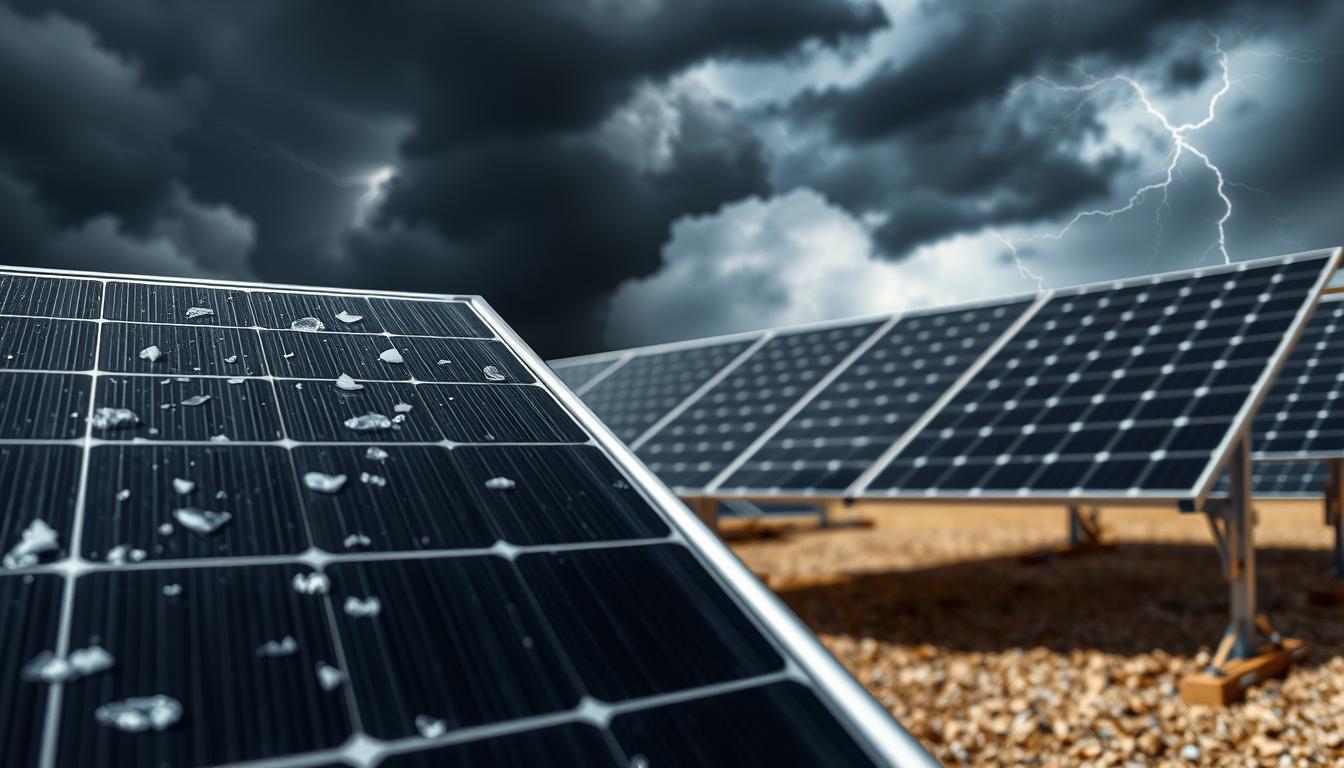
Hurricane season in the Florida Panhandle runs from June 1 to November 30, and the storms that do the most damage here rarely give more than a few days of warning. Homeowners from Pensacola to Panama City Beach who got through Sally and Michael with the least trouble had one thing in common: they did the boring preparation weeks ahead, not in a crowded hardware store the day before landfall. This hurricane season home checklist is split into what to do now, what to do when a storm is forecast, and what to do afterward.
Solar Cost Calculator – Florida Panhandle Only
* Estimate based on $3.25 per watt for solar installation.
* For Tesla Powerwall 3 Batteries, $15,000 for the first battery, $12,000 for each additional battery.
* Other variations and types of Batteries are available.
Before the season: the jobs that take time
These are the tasks you cannot do in 48 hours, so they belong on the calendar in spring or early summer.
- Walk the roof line. Look for lifted shingles, cracked sealant around vents and loose flashing. Small gaps are where wind-driven rain gets in. If your roof is past the middle of its life, book a roofer before the season, not during it.
- Check every opening. Test your shutters or panels, count the fasteners, and make sure the garage door is braced or wind-rated. A failed garage door is one of the most common ways a house loses its roof.
- Trim trees. Remove dead limbs and anything hanging over the roof or the service drop from the power pole.
- Photograph everything. Take dated photos of each room, the roof, the outdoor equipment and serial numbers. Store them in the cloud.
- Read your policy. Know your hurricane deductible, which is usually a percentage of the insured value and not a flat figure, and confirm whether you carry separate flood cover.
- Decide on backup power. A portable generator, a generator inlet on your panel, or battery storage all need to be bought and installed well before a storm is named.
When a storm is forecast: the 72-hour list
Once the cone includes Escambia, Santa Rosa, Okaloosa, Walton or Bay County, work through this list in order.
- Fill vehicles and fuel cans, and get cash. Card readers stop working when the power does.
- Stock one gallon of water per person per day for at least five days, plus food that needs no cooking.
- Refill prescriptions and charge every phone, power bank and tool battery.
- Bring in or tie down everything outside: grills, trash cans, patio furniture, trampolines.
- Install shutters or panels and lock every window.
- Turn the fridge and freezer to their coldest setting and freeze containers of water to fill empty space.
- Know your evacuation zone and leave when your zone is called. Property can be repaired.
If you have solar panels or a battery
A properly installed array is designed for Florida wind loads and should stay on the roof. Do not try to remove panels or cover them with tarps. If you have battery storage, charge it to full and check that your backup settings are on storm mode if your system has one. If your system is grid-tied with no battery, remember that it shuts down with the grid for the safety of line crews, so it will not power the house during an outage. Our guide to whether solar works during power outages explains why, and the piece on solar and hurricane readiness covers backup options in more detail.
After the storm: safety first, then paperwork
- Stay away from downed lines and standing water near electrical equipment. Assume every line is live.
- Run generators outside only, at least 20 feet from doors and windows. Carbon monoxide poisoning from generators is a leading cause of death after hurricanes.
- Photograph damage before you move or repair anything, then make temporary repairs to stop further water getting in. Keep receipts.
- Call your insurer early. Adjusters work claims in the order they arrive.
- If you have solar, look at the array from the ground. Do not climb onto a wet or damaged roof. If you see lifted panels, loose conduit or an inverter fault, have it inspected before switching anything back on.
MSM Solar carries out post-storm inspections with a written report for insurance, on systems of any brand, including those installed by companies that are no longer in business.
Where backup power fits into your plan
After Michael, parts of Bay and Jackson County were without power for weeks. That is the outage a hurricane plan in Marianna, Lynn Haven or Port St. Joe has to assume. A portable generator covers a fridge and a few lights if you can keep it fueled. A generator inlet lets you run selected circuits safely from that generator. Battery storage paired with solar recharges every day the sun comes out, with no fuel runs. Which one suits you depends on what you need to keep running: a well pump, medical equipment and air conditioning each change the answer.
If you want to price the options for your own home, we install battery storage and generator inlets across 36 Panhandle towns, and site surveys are free.
A hurricane kit that fits a Panhandle home
Most checklists stop at water and batteries. After a week without power in August, the things people wished they had were more specific.
- Cooling. Battery or rechargeable fans, and a way to recharge them. Heat is the hardest part of a summer outage.
- Light. One headlamp per person beats a drawer of flashlights.
- Power for phones. Two charged power banks and a car charger.
- Paperwork. Insurance policies, IDs, deeds and prescriptions in a waterproof pouch, with photos of each on your phone.
- Tools. A manual can opener, tarp, duct tape, work gloves, a hand saw and a fuel siphon.
- Cash and fuel. Small bills, and the vehicle tank kept above half from August onwards.
- Pets. Food, water, a carrier and vaccination records, because many shelters ask for them.
Know your county before the storm does
Evacuation zones, shelter locations and sandbag sites are set by each county, and they differ between Escambia, Santa Rosa, Okaloosa, Walton, Bay, Gulf and Franklin. Look up your zone on your county emergency management website now and write it on the fridge. Sign up for your county's text alerts while you are there. If you live on a barrier island such as Navarre Beach, Okaloosa Island or St. George Island, plan to leave early, because bridges close once winds reach a set speed.
Protecting the systems that keep the house running
The equipment outside your home is expensive and exposed. Strap down or shelter what you can. Switch off the breaker to the outdoor AC unit before the storm arrives, and leave it off afterward until you have checked that the unit has not been flooded or struck by debris. Shut off propane at the tank if you evacuate. If you have a pool, do not drain it; lower the level slightly and switch off the pump at the breaker. If you have a well, fill bathtubs and containers beforehand, because the pump will not run without power.
Frequently asked questions
When should I start preparing for hurricane season?
Start in April or May. Roof repairs, tree work, shutters and backup power all have waiting lists once the first storm of the year is named.
Do I need to remove my solar panels before a hurricane?
No. Panels installed to Florida wind requirements are meant to stay in place, and removing them risks damaging the roof and the system. Leave them alone and have them checked afterward if you see anything out of place.
Will my solar panels power my house if the grid goes down?
Only if the system includes battery storage or a backup-capable inverter. A standard grid-tied system shuts off during an outage to protect line crews.
How long should I plan to be without power?
Plan for at least five to seven days. Inland counties such as Jackson and Calhoun waited much longer after Hurricane Michael.
Conclusion
Do the slow jobs early: roof, openings, trees, photos, insurance and backup power. Use the 72 hours before landfall for fuel, water, medication and securing the yard. After the storm, put safety ahead of clean-up and document everything before you touch it. A plan written in May is worth more than a full shopping cart in September.
Storm preparation and energy independence go together. If this season has you thinking about battery backup, a generator inlet or having an existing solar system checked before the next storm, we can help anywhere from Pensacola to Apalachicola. Call MSM Solar at (850) 737-5197 or request a free quote, and we will call you back no later than two business days.