
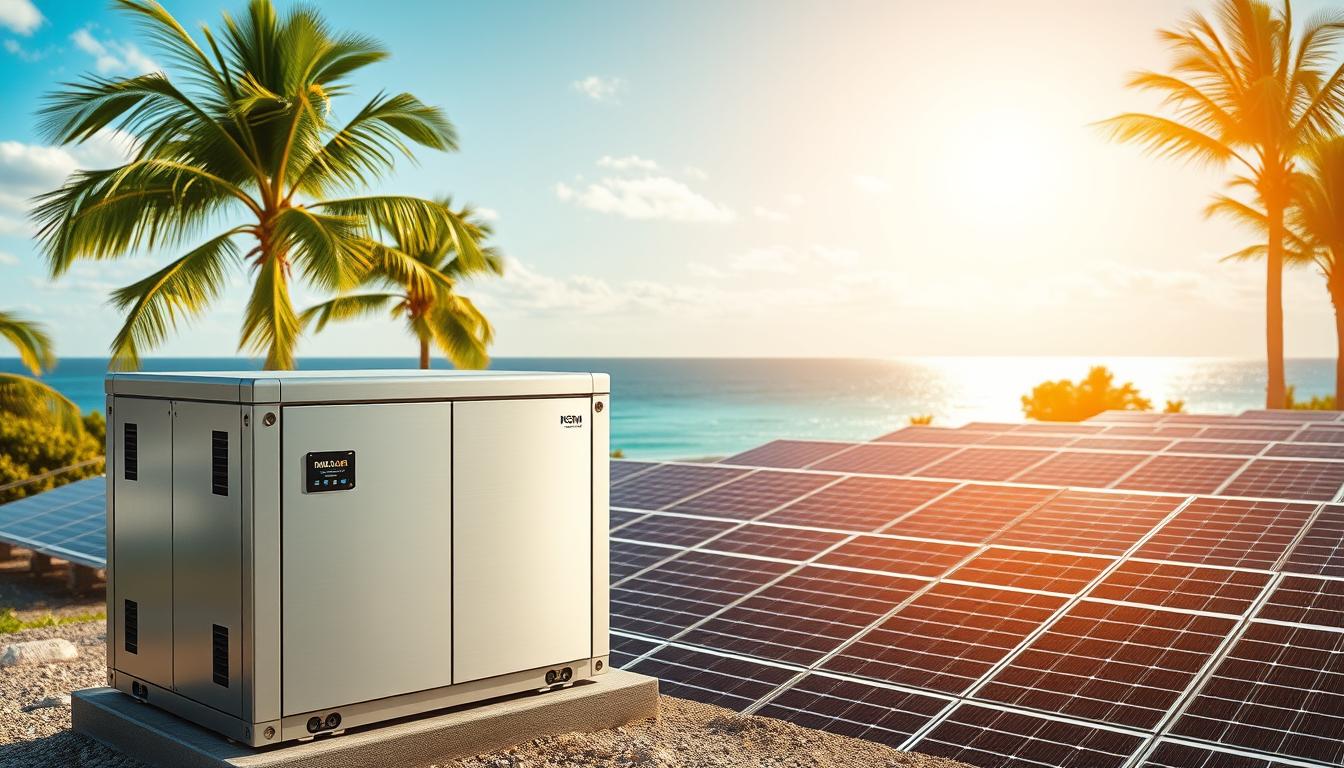
After every long outage in the Panhandle, the same question comes up in Niceville, Gulf Breeze and Lynn Haven: what does a whole-house generator cost in Florida, and is it worth it? The honest answer is that the unit itself is only part of the bill. Fuel supply, electrical work, permits and yearly servicing all add to it, and for some homes a different kind of backup makes more sense.
Solar Cost Calculator – Florida Panhandle Only
* Estimate based on $3.25 per watt for solar installation.
* For Tesla Powerwall 3 Batteries, $15,000 for the first battery, $12,000 for each additional battery.
* Other variations and types of Batteries are available.
What the generator itself costs
Standby generators are priced mainly by output. According to Florida PACE's pricing guide, typical unit prices are:
| Size | What it runs | Typical unit price |
|---|---|---|
| 7 to 10 kW | Fridge, lights, a few circuits | $3,000 to $5,000 |
| 12 to 20 kW | Most of a mid-sized home, one AC system | $5,000 to $10,000 |
| 22 to 30 kW and up | A large home with multiple AC systems | $10,000 and up |
The same guide puts professional installation at roughly $2,000 to $6,000 on top of the unit, and yearly maintenance at $200 to $500.
The costs people forget
- Fuel supply. A standby generator needs natural gas or a propane tank. Much of the rural Panhandle has no gas main, so you may be buying or leasing a tank and paying for the gas line to be run.
- Transfer switch and electrical work. The automatic transfer switch, any panel upgrade and the wiring between them can be a large part of the installation figure.
- Concrete pad, permits and placement. Counties have setback rules from windows, doors and property lines. In flood zones the unit may need to be raised.
- Fuel during a long outage. A large unit under load can use several gallons of propane an hour. After a major hurricane, refills are not guaranteed.
- Servicing. Generators need regular exercise runs, oil changes and a battery that is kept charged. One that has been ignored for three years may not start when you need it.
How the alternatives compare
| Option | Upfront cost | Runs on | Good for |
|---|---|---|---|
| Portable generator with a generator inlet | Lowest | Gasoline or propane | Fridge, lights, fans, a window unit; you start and refuel it yourself |
| Standby generator | Medium to high | Natural gas or propane | Whole-home loads including central AC, as long as fuel lasts |
| Battery storage with solar | Medium to high | Sunlight | Silent, automatic backup that recharges daily with no fuel deliveries |
For reference, a Tesla Powerwall 3 installed by MSM Solar runs about $15,000 for the first battery and $12,000 for each additional one. A single battery will not run a whole house with the air conditioning on full for days, and it is important to size storage to the loads you really need. Our article on whole-home versus essential-loads backup explains how that choice is made, and generators versus batteries versus solar goes through the trade-offs.
Which one suits your home?
Ask yourself three questions.
- What must stay on? A well pump, medical equipment and a freezer are a very different load from two central AC systems.
- How long are your outages? A few hours several times a year points one way. A week after a major hurricane points another.
- What fuel can you count on? If you are on natural gas in Pensacola, a standby unit is simpler. If you rely on propane deliveries north of Crestview or around Marianna, a system that makes its own power each day has an advantage.
Many homeowners end up with a mix: solar and a battery for everyday savings and silent backup, plus a generator inlet so a portable unit can top things up in a long stretch of bad weather.
Getting real numbers
MSM Solar installs battery storage, generator inlets and EV chargers, and can add storage to an existing solar system from any installer. We will tell you what your loads need and what it costs before any work starts. If a standby generator is the better answer for your home, we will say so.
How to size a generator for your house
Size is the biggest driver of price, so it is worth getting right. An installer should carry out a load calculation, but you can estimate it yourself.
- List what must run during an outage: fridge, freezer, well pump, lights, internet, medical equipment.
- Add what you would like to run: central air conditioning, water heater, range, dryer.
- Note the starting demand of anything with a motor. A central AC compressor or a well pump needs far more power for the first second than it does once running.
- Decide whether everything needs to run at once. Load management modules can stop the water heater and the AC from starting together, which lets a smaller unit do the job.
Many Panhandle homes with one AC system land in the middle size band. A home with two systems, an electric range and a pool usually needs the largest band or a load-managed design.
Noise, neighbors and HOA rules
Standby generators are quieter than portables, but they are not silent, and they run a short self-test every week or two. Check your homeowners association rules in communities around Destin, Santa Rosa Beach and Panama City Beach before you buy, because some restrict where a unit can sit or when it may be tested. Batteries make no noise and need no outdoor pad, which is one reason they are common in tightly spaced coastal neighborhoods.
Running costs over ten years
The purchase is one part of the bill. Over a decade, add yearly servicing, a replacement starting battery or two, fuel for test runs, and fuel for real outages. A solar battery has almost no running cost and earns its keep on ordinary days by storing daytime production for the evening. That difference matters most to households that would otherwise only use their backup a few days a year.
Frequently asked questions
How long can a whole-house generator run?
As long as it has fuel and is given rest for oil checks, according to the maker's instructions. On natural gas that can be days. On propane it depends on tank size and load.
Does a generator lower home insurance in Florida?
Some insurers offer a small discount for a permanently installed standby unit. Ask your agent before you buy, and do not count on it to justify the cost.
Can I use a generator and solar together?
Yes, with the right equipment. A generator inlet or an integrated system lets a generator support the home or recharge batteries during long cloudy spells. It has to be designed properly so the two sources never feed each other.
Is a battery cheaper than a generator?
For short outages and a modest list of essential loads, a single battery can be comparable to a mid-sized standby installation. For running a whole large home for many days, a generator usually costs less upfront. The right answer depends on your loads.
Conclusion
Budget for the unit, the installation, the fuel supply and the yearly upkeep together. Then compare that total with battery storage and with a simple inlet for a portable generator. The right choice is the one that keeps your essential loads running for the length of outage you are likely to face.
Whether the answer for your home is a standby generator, a generator inlet, a battery or a mix, it helps to see real numbers side by side. We can price battery storage and inlets for your home and tell you honestly how they compare. Call MSM Solar at (850) 737-5197 or request a free quote, and we will call you back no later than two business days.